
Winter driving · Wasaga Beach, Collingwood & Stayner
Your first winter behind the wheel in Wasaga Beach
Good winter driving starts before you move the car. Check the whole journey, prepare the vehicle, and give yourself room to change your plans. The goal isn’t to prove you can drive through anything. It’s to get home safely.
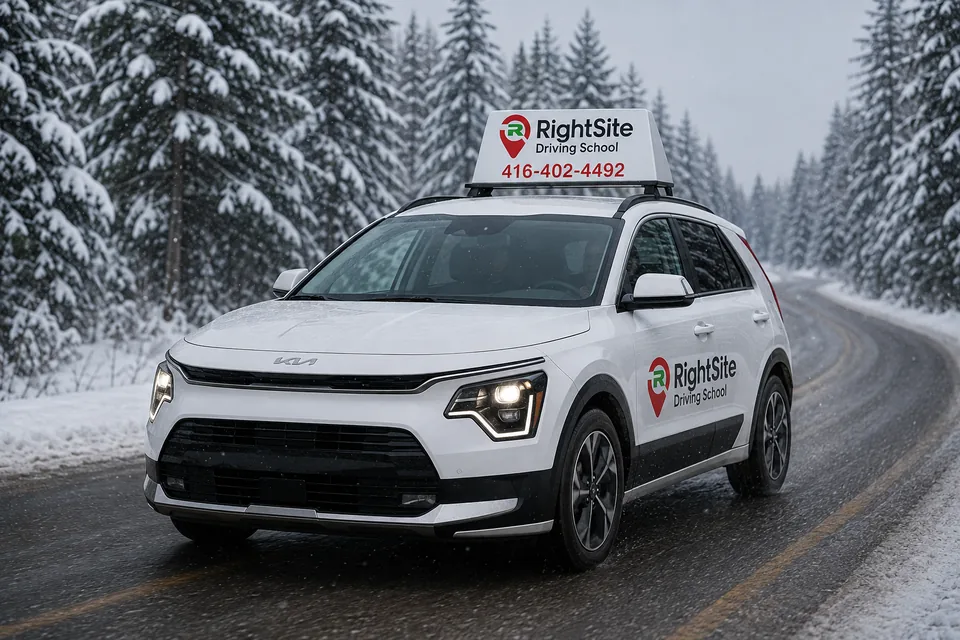
A familiar road can feel very different when you can’t see its markings or the next intersection clearly. If this is your first Canadian winter, or your first winter driving alone, start by separating two questions: “Am I allowed to drive?” and “Am I prepared for this journey?” A licence answers the first one.
How do you decide whether to drive or wait?
Check the forecast, the route and the return trip before deciding to leave. A clear driveway doesn’t tell you what the rest of the journey will be like.
Ontario 511 shows highway closures, cameras, reported road conditions and winter-maintenance information. Check the areas you’ll actually travel through. A report is a planning aid, not a guarantee about the next kilometre.
Transport Canada’s trip-planning advice recommends checking weather warnings, allowing extra time and waiting when conditions are bad. Give yourself a real alternative: delay the appointment, ask about another time, or stay home.
For a trip from Wasaga Beach toward Collingwood, check the Highway 26 part as well as the streets at each end. For Stayner, think about the roads between towns, not just your destination. Don’t use someone else’s comfortable driving pace as evidence that the conditions suit your experience.
What should you sort out before the first snowfall?
Make sure the car is ready, and learn its controls while it’s parked. Finding the defroster for the first time in traffic adds a problem you could have avoided.
Practise selecting the front defrost, rear-window heater and lights. Read the owner’s manual. Know which warning lights need attention, and where the snow brush and scraper are kept.
Have a technician check anything that isn’t working properly. Transport Canada’s winter vehicle guidance covers the battery, brakes, lights, heating, wipers and washer fluid. Put repairs ahead of a practice drive.
For tires, Transport Canada recommends four winter tires and identifies the mountain-and-snowflake symbol as a snow-traction standard. Check condition and cold tire pressures against the vehicle’s information label. Read its winter-tire guidance; ask a qualified tire shop about the right fit for your car.
Good tires help. They don’t remove the need to judge the road, leave room or postpone a trip.
What changes when the road becomes slippery?
Give yourself more space and make your driving decisions earlier. Transport Canada advises reducing speed for conditions, increasing following distance and avoiding abrupt inputs on slippery roads.
Leave the rush behind before you start. If your schedule depends on driving as though the pavement is dry, change the schedule. Plan a turn early rather than leaving the decision until you reach the intersection.
A queue on Mosley Street or River Road West is a chance to practise patience, not squeeze into the last available gap. In downtown Collingwood, keep looking for people near parked cars and crossings. Familiarity with a street shouldn’t switch off your attention.
Know your braking system before driving. Read the manual and ask your instructor to explain it in plain language. Don’t experiment with skids, emergency braking or traction limits on public roads. Transport Canada also advises against cruise control in extreme weather. See its winter-driving guidance.
Why can a road that looks wet still be a problem?
Thin ice can be difficult to recognise. The MTO Driver’s Handbook warns that bridges, overpasses and shaded sections can freeze first, and that shiny, dark pavement may be black ice.
Treat a change in surface or visibility as a reason to reassess. Don’t assume the next section has the same grip as the section you’ve just driven. Watch the road ahead without testing it through sudden braking.
The handbook also warns against passing between snowplows working together. Their equipment and the snow they move need room. Waiting behind winter-maintenance work can be part of the journey, not a delay you have to make up later.
How should you plan your first winter practice drive?
Choose manageable conditions and a small learning goal with a qualified accompanying driver or instructor. A storm shouldn’t be your first practice session.
Start with a discussion before the car moves. What will you work on? What would make you finish early? Where can you safely end the drive? If you’re learning under a G1, your usual licence restrictions still apply; check DriveTest’s G1 conditions.
Keep the review specific afterwards. Did you need reminders to plan ahead? Did unfamiliar conditions use so much attention that you missed signs? Write down one skill to revisit. Our guide to planning driving lessons around your skills explains how to make that feedback useful.
Parents can help by agreeing on the task before leaving, keeping instructions calm and discussing one improvement afterwards. Don’t turn an already demanding drive into a running list of every mistake.
What if visibility becomes too poor to continue?
Look for a safe place off the roadway to end the drive; don’t stop in a live traffic lane. Both the MTO handbook and Transport Canada advise getting to a suitable safe place when visibility makes driving unsafe.
Carry warm layers, a blanket, a flashlight, a small shovel and a charged phone with its cable. If stranded, Transport Canada says to stay inside when the vehicle isn’t at risk of being hit, keep the exhaust clear of snow and run the engine sparingly. Call 911 for an emergency. Review the full emergency guidance before travelling.
Questions before your first winter
Can I learn winter driving after passing my G2?
Yes. Passing a road test doesn’t cover every condition you’ll meet later. Discuss your experience and learning goals with an instructor, and choose suitable conditions for practice.
Do winter tires mean I can drive normally in snow?
No. Winter tires help traction, but you still need to adjust for the surface and visibility. Transport Canada recommends four winter tires. A poor-weather trip may still need to wait.
Should my first winter lesson be during a snowstorm?
No. Start with a manageable plan and suitable conditions. Discuss the route, the skill you’ll practise and when to finish early. Difficult weather isn’t something you need to seek out to make a lesson worthwhile.
Where can I check highway conditions near Wasaga Beach?
Use Ontario 511 for reported highway conditions, cameras and closures. Check your route and the return journey. Conditions can change, and highway information doesn’t describe every local street.
RightSite Driving School is based in Wasaga Beach and serves learners from Collingwood, Stayner, The Blue Mountains, Thornbury and Meaford. If you’d like help preparing for winter, check available lesson times or call 416-402-4492. Tell us what you want to feel more confident doing, so we can discuss the next step.