Home › G1 Practice Test › Road Signs Test
Ontario G1 Road Signs Practice Test
Look at the sign, pick what it means. Each road signs test gives you 20 questions with pictures, and you see the meaning of every sign you missed at the end. Below the test there’s a chart of common Ontario signs you can study any time.
- 62 sign questions
- 20 per test
- Sign pictures
- Free
Shapes and colours to know
You can often tell what kind of sign it is before you can read it. That matters at the test — and even more on a snowy day when a sign is half covered.
| Sign | What it looks like |
|---|---|
| Stop | Eight-sided, red with white letters. Come to a complete stop. |
| Yield | Triangle pointing down, white with a red border. |
| School zone | Five-sided, fluorescent yellow-green with black symbols. |
| Railway crossing | X-shaped, white with a red outline. |
| Regulatory | Usually rectangular or square, white or black background. A green circle means you may or must do it; a red circle with a line through it means you can’t. |
| Warning | Usually diamond-shaped, yellow with black letters or symbols. |
| Temporary conditions | Usually diamond-shaped, orange with black letters or symbols — road work, detours, lane closures. |
| Information and direction | Usually rectangular, green with white letters — distances and destinations. |
| Slow-moving vehicle | Orange triangle with a red border, on vehicles that travel 40 km/h or less. |
Common Ontario road signs and what they mean
These are the signs used in our practice test. Study them, then take the test to see which ones stick.
Signs with their own shape
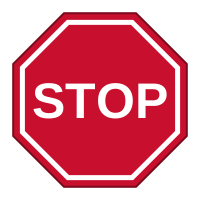 Stop signCome to a complete stop, then go only when the way is clear
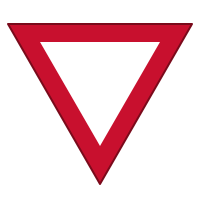 Yield signLet traffic in or near the intersection go first, and stop if you need to
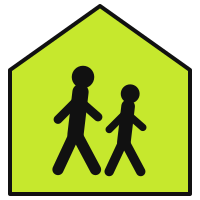 School zone signYou are coming to a school zone. Slow down, drive with extra care and watch for children
 Railway crossing signRailway tracks cross the road. Slow down, look both ways and be ready to stop
Regulatory signs — rules you must obey
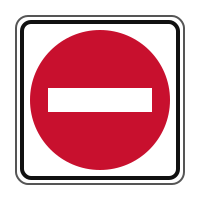 Do not enter signDo not enter this road
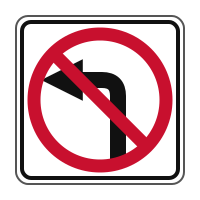 No left turn signDo not turn left at the intersection
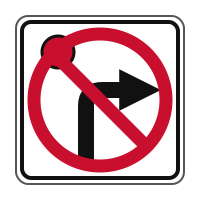 No right turn on red signDo not turn right when facing a red light at this intersection
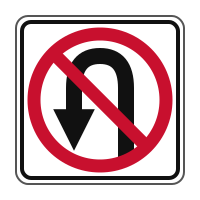 No U-turn signDo not turn around to go in the opposite direction (no U-turns)
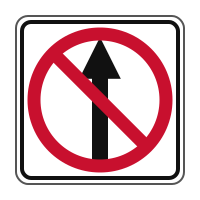 No straight through signDo not drive straight through the intersection
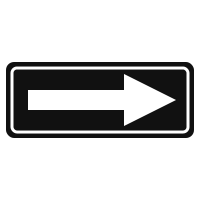 One way signTraffic may travel in one direction only
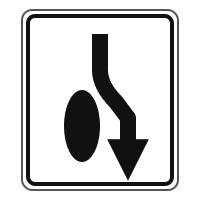 Keep right of traffic island signKeep to the right of the traffic island
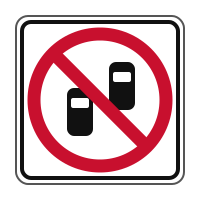 Do not pass signDo not pass on this road
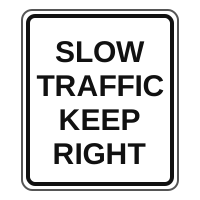 Slow traffic keep right signSlower traffic must keep to the right
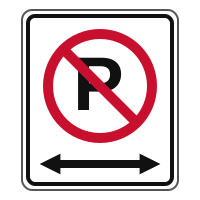 No parking signDo not park in the area between these signs
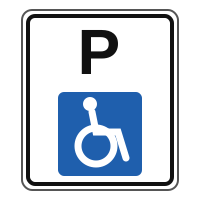 Accessible parking signParking only for vehicles displaying a valid Accessible Parking Permit
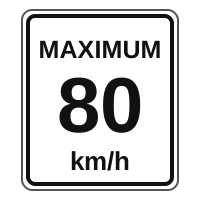 Maximum speed 80 km/h signThe maximum speed allowed is 80 km/h
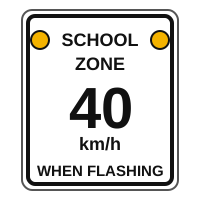 School zone speed limit signThe speed limit in this school zone is lower when the yellow lights are flashing
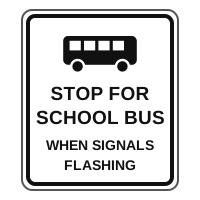 Stop for school bus when signals flashing signOn this road, drivers coming from both directions must stop for a school bus when its signal lights are flashing
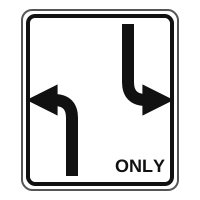 Two-way left-turn lane signThe centre lane is only for left turns by traffic going in both directions
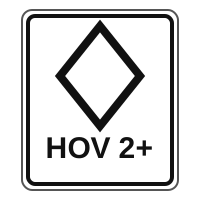 High occupancy vehicle lane signThis lane is a high-occupancy vehicle (HOV) lane, for vehicles carrying at least two people and other allowed vehicles
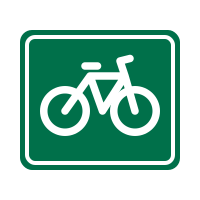 Bicycle route signThis road is an official bicycle route — watch for cyclists and share the road
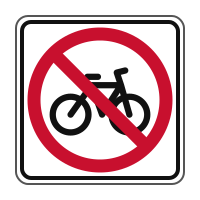 No bicycles signNo bicycles allowed on this road
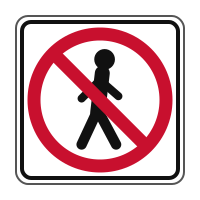 No pedestrians signNo pedestrians allowed on this road
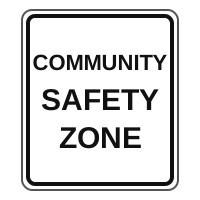 Community safety zone signThe community has marked this area as a special risk to pedestrians, and traffic fines are higher here
Warning signs — yellow diamonds
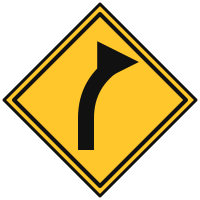 Curve ahead warning signSlight bend or curve in the road ahead
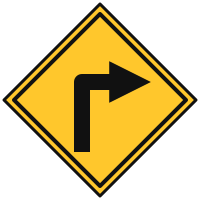 Sharp turn ahead warning signSharp bend or turn in the road ahead
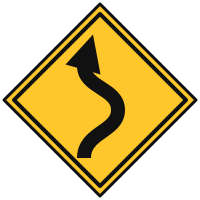 Winding road warning signWinding road ahead
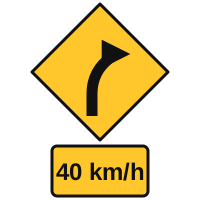 Curve warning sign with speed tabThe maximum safe speed for the curve
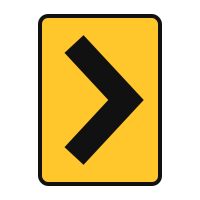 Chevron curve marker signChevron signs guide drivers around a sharp curve
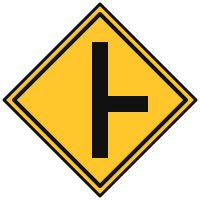 Side road warning signSide road on the right ahead
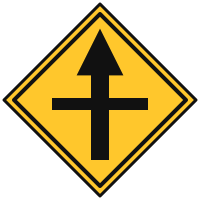 Intersection ahead warning signIntersection ahead. The arrow shows which direction of traffic has the right of way
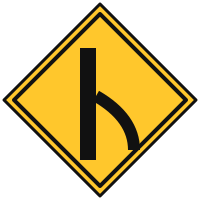 Merging traffic warning signTwo roads going the same way are about to join. Drivers on both roads share responsibility for merging safely
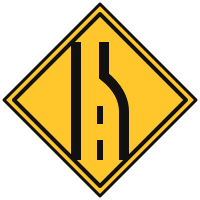 Right lane ends warning signThe right lane ends ahead. If you are in it, merge safely with traffic in the lane to the left
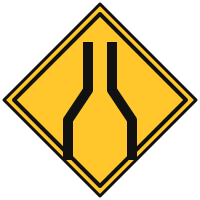 Pavement narrows warning signThe pavement narrows ahead
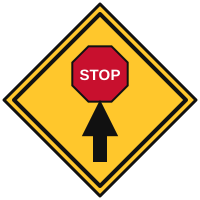 Stop sign ahead warning signThere is a stop sign ahead. Slow down
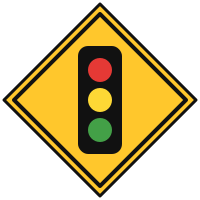 Traffic lights ahead warning signTraffic lights ahead. Slow down
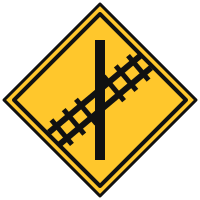 Railway crossing ahead warning signRailway crossing ahead. The sign shows the angle at which the tracks cross the road
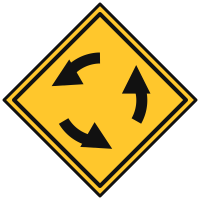 Roundabout ahead warning signRoundabout ahead. Reduce speed; traffic moves counter-clockwise
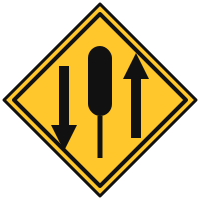 Divided highway begins warning signDivided highway begins. Keep to the right-hand road; each road carries one-way traffic
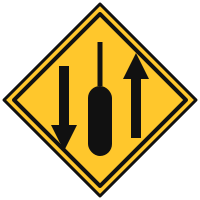 Divided highway ends warning signDivided highway ends. Traffic travels in both directions on the same road ahead — keep right
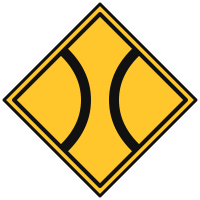 Narrow bridge warning signNarrow bridge ahead
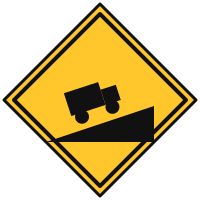 Steep hill warning signSteep hill ahead. You may need to use a lower gear
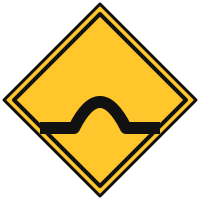 Bump ahead warning signBump or uneven pavement ahead. Slow down and keep control of your vehicle
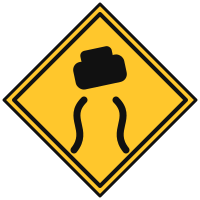 Slippery when wet warning signPavement is slippery when wet. Slow down and drive with caution
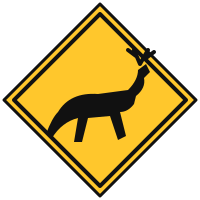 Deer crossing warning signDeer regularly cross this road — be alert for animals
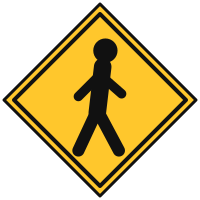 Pedestrians warning signWatch for pedestrians and be prepared to share the road with them
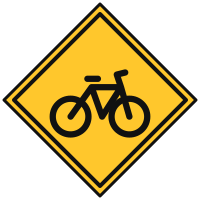 Bicycle crossing warning signBicycle crossing ahead
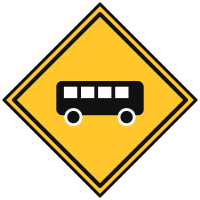 Hidden school bus stop ahead warning signHidden school bus stop ahead. Slow down and watch for children and a school bus with flashing red lights
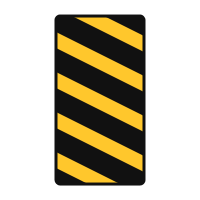 Hazard marker signThere is a hazard close to the edge of the road; the downward lines show the side on which you may safely pass
Temporary condition signs — orange
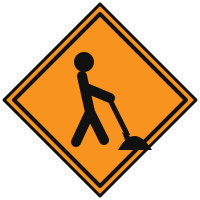 Road work ahead signRoad work ahead
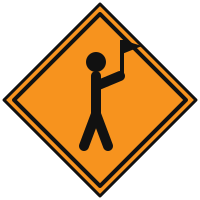 Traffic control person ahead signTraffic control person ahead. Drive slowly and watch for instructions
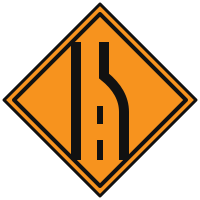 Lane closed ahead signThe lane ahead is closed for road work. Obey the speed limit and merge with traffic in the open lane
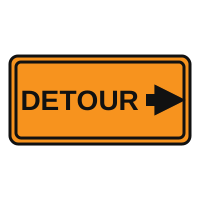 Detour signTemporary detour from the normal traffic route
Other signs
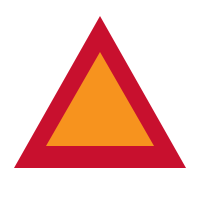 Slow-moving vehicle signThe vehicle ahead travels at 40 km/h or less
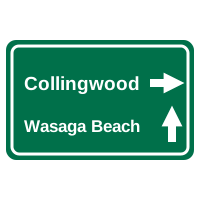 Direction signDirections or distances to towns and destinations
Common questions
How many road sign questions are on the G1 test?
Road signs are one of the two main parts of the G1 knowledge test, along with rules of the road. Check drivetest.ca for the current number of questions and the pass mark.
What colour are construction signs in Ontario?
Temporary condition signs, such as road work, lane closures and detours, are usually orange with black letters or symbols.
What does a yellow diamond sign mean?
Yellow diamond signs are warning signs. They tell you about dangerous or unusual conditions ahead, such as a curve, a side road, a hill or animals crossing.
Are these the actual signs from the Ministry?
The pictures are RightSite illustrations drawn to look like the real Ontario signs — same shapes, colours and symbols — so you can learn to recognise them.
More ways to practise
This practice test is an educational resource created by RightSite Driving School. It is not an official Ontario Ministry of Transportation test. Questions are independently created based on information in the Official MTO Driver’s Handbook. Rules and fees can change — always check ontario.ca and drivetest.ca for the latest information. Sign pictures are RightSite illustrations drawn to look like Ontario signs.